


10 Tips for Selling at Art Shows and Festivals - From An Artist Who Has Done 200 Plus Shows
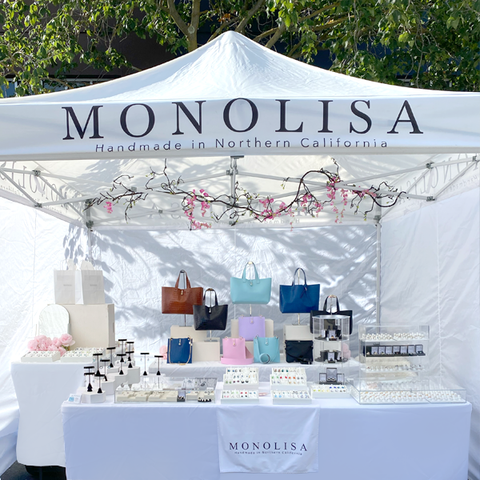
If you are curious about tips for selling at art shows and festivals, you have arrived at the right place. I am a handbag and jewelry artist and have done over 200 art shows and festivals since launching my business, MONOLISA.
I have been writing about my art show and festival journey in my monthly Artist Life Blog. Participating in shows has brought many learning experiences over the years. It has taught me about marketing techniques, art show logistics, improving sales performance, and the psychology behind customer behavior. One thing that never changes is that it is extremely hard work.
In this article I am sharing 10 tips for selling your work at art shows and festivals, based on my own experience doing shows throughout California.
Looking for art shows and festivals to apply to or visit? Explore the California Art Shows & Festivals Directory, featuring hundreds of events across California. Artists searching for upcoming opportunities can also browse the Vendor Opportunities Listing.
Tips for Selling Your Work at Art Shows and Festivals
Know Your Target Market
Understand who your target market is. Who is buying your work and showing genuine interest? Ask yourself what type of spending power your customers have, because that can help guide you geographically toward the shows where your ideal customer is more likely to shop.
For example, if you are selling higher-end art pieces, you want to participate in events that attract shoppers with disposable income who appreciate art and handmade work.
Gain Show Experience
Participating in shows helps an artist better understand their audience and how people respond to their work. Different show experiences give you insight into where your customer shops and whether they are connecting with what you create.
Do not be shy — speak to customers. Conversations can inspire new products or help you refine existing ones. When I first started selling handbags, I kept hearing customers say it would be great if my crossbody bags had adjustable straps. After hearing that over and over, I decided to create some bags with adjustable straps. That small change helped increase my sales and better meet customer needs.
Keep in mind, building a customer base takes time. It does not happen overnight. Do not overthink doing shows — get out there and work on becoming comfortable selling.

Real conversations with customers can shape your collection, strengthen your sales approach, and help you understand what people are truly responding to.
Be a Great Salesperson
If you can become a strong salesperson, you will be on the road to success. Sales require customer interaction, patience, and practice. A short introduction of under 30 seconds is a good starting point when greeting people who enter your booth.
I enjoy discussing how I make my collection, the materials I use, and what makes my work unique. That is often a natural entry point into a conversation. The goal is to connect, not overwhelm. A short introduction is a balance between sharing and talking too much.
Many people want to hear your story — how you got started and how your business has evolved. Others may not, so patience and awareness matter.
Send a Monthly Newsletter
Marketing to your customers and potential customers is essential to growing a business. One of the best and easiest ways to do this is to build an email list of customers and interested shoppers.
I prefer using an app such as Mailchimp to collect emails, because I often cannot read people’s handwriting at shows. Sending a consistent monthly email about your show schedule is a great reminder about your work. This marketing technique pays off over time — I have seen the results in my own business.
It also helps the art show community as a whole. If some of my customers come to a show, they may also shop with other artists. We are all in this together.

A welcoming booth display and customer interaction go hand in hand when building trust, growing a collector base, and encouraging repeat visits.
Invest in an Awning
Keep customers comfortable and encourage shopping by investing in an awning for hot, sunny days. It took me a few years to find one that looked professional and held up well.
The awning I recommend is the standard 10 foot awning kit from Camelback Displays. The only thing I regret is not finding it sooner. I lost sales opportunities on hot days when customers could not quickly find shade.
Always check with the event promoter first, because some cities do not allow awnings due to fire code regulations.
Bring an Industrial Dolly
A durable dolly is one of the most important pieces of equipment you can own. It makes load-in and load-out far easier. I see so many vendors struggling to transport their displays and inventory when the right dolly could make a huge difference.
I use the RocknRoller Multi-Cart R18RT “Mega Plus.” It has a powder-coated steel frame, extends from 42 to 60 inches, holds up to 700 pounds, collapses easily, and weighs only 37 pounds. It is the best dolly I have ever used and worth every penny.

The right equipment makes a huge difference. A dependable dolly saves time, energy, and unnecessary stress during load-in and load-out.
Listen to Customer Feedback
Listening to customers goes a long way. While I am interacting with people at shows, I value both positive and negative feedback. It helps me better understand my market and what people are shopping for.
Over the years I have fine-tuned and expanded my collection based on customer reactions, questions, and buying patterns. That strategy has helped me build a better body of work and improve sales.
Be Prepared for Any Type of Weather
Mother Nature is always part of the equation, so be prepared. Heat, wind, rain, and cold can affect sales and your physical stamina.
My outdoor show essentials include a hat, sunglasses, sunscreen, sneakers, frozen water, snacks, a jacket, allergy medicine, Tylenol, cough drops for my voice, standing mats, a comfortable chair, and portable fans. Other must-haves include strong tent weights, durable displays, rain covers for transporting work, and an extra pair of shoes and socks. If you walk through wet grass at 6 a.m., your feet may get soaked. It has happened to me many times.

Outdoor events rarely come with perfect conditions. Being prepared for changing weather can protect both your work and your energy.
Load-In Tips
Arrive early. Arriving early often means setting up faster and finding a better parking spot. My philosophy is simple: I can sleep later.
If you arrive when it is already crowded, your patience will likely be tested before the show even starts. Another bonus is that if your booth is fully ready before opening, you may make early sales when you least expect it.
Load-Out Tips
After taking down my booth well over 100 times, I have almost perfected the method that works best for me. First, I take down my entire booth. Then I load all of my artwork onto the dolly — usually six bins with plastic cases stacked on top. Next, I move the remaining equipment, like my table, weights, and display pieces, off to the side near the curb. That gives me room to collapse the pop-up tent.
I usually make three dolly trips to my car, which helps me avoid vendor traffic gridlock. It is physically demanding, but I do not have to fight the line of cars and usually get out faster than many others. My goal is to get packed, get moving, and head home.

Load-out takes just as much planning as setup. A system that works for you can make the end of a long show day much smoother.
I am writing this to help new artists starting a business, and also for creative entrepreneurs who are curious about what I have learned from years of doing shows.


Leave a comment